The Takeaway: Direct engagement with homeowners and contractors, combined with strong partnerships and clear guidance on permitting, is key to building trust and expanding the use of living shorelines across the Gulf Coast.
Overview
Eric Sparks and his team, including Jaden Akers and Sara Martin at Mississippi State University’s (MSU) Coastal Research and Extension Center, developed a technical assistance program that directly supports private landowners and contractors implementing living shorelines. Their work spans Mississippi, Alabama, and Florida, addressing permitting barriers, building contractor capacity, and strengthening regional partnerships. By combining outreach, policy guidance, and training, the team demonstrates how hands-on engagement helps scale nature-based shoreline stabilization across the northern Gulf Coast.

Lessons Learned
- Expect delays in permitting and project timelines. Even when a living shoreline permit moves “quickly,” the process often takes six months or more, and some projects have stretched to nearly two years. The MSU team found that keeping landowners informed and engaged during these waiting periods is critical. Otherwise, communication can break down, and frustrations mount, leading to setbacks.
- Manage expectations and avoid overpromising. Supplies, especially native plants, are limited across the Gulf Coast. A single project may require thousands of plants, which can strain availability. The team cautions others to secure materials before committing to timelines and to be upfront with landowners about potential shortages or sourcing challenges.
- Contractor training is essential. Many contractors are familiar with bulkheads and other traditional hard stabilization methods, but have less experience with living shorelines. Dedicated training and resource-sharing with contractors helped build capacity, improved installation quality, and created a stronger base of practitioners comfortable with nature-based approaches.
- Partnerships expand credibility and reach. Collaborations with entities such as Mississippi-Alabama Sea Grant, Mississippi Department of Marine Resources, the Little Lagoon Preservation Society, the City of Gulf Shores, Weeks Bay Research Reserve, and Grand Bay Research Reserve enhanced outreach and provided institutional support for projects. Engaging schools, master gardeners, and community groups through the Native Plant Producer Network also provided much-needed plant stock and broadened public involvement.
- Policy and permitting consistency is a barrier and an opportunity. Each Gulf Coast state has different rules and procedures for approving living shorelines, which can confuse homeowners and contractors. MSU staff recommend ongoing coordination across state lines to improve consistency, reduce uncertainty, and make living shorelines a more accessible option for landowners.
- Direct homeowner engagement builds trust. The team emphasized that outreach must be grounded in clear, jargon-free communication. Many landowners are unfamiliar with nature-based solutions and hesitant to change from traditional methods. By taking time to explain benefits, provide site-specific assistance, and maintain regular contact, the program strengthened relationships and increased homeowner confidence in trying new approaches.
- A blended approach to funding is critical. While the combination of funding streams has been critical, the team emphasized that uncertainty in grant cycles and communication challenges with landowners remain ongoing obstacles. The blended approach shows the importance of leveraging diverse funding partners to sustain technical assistance and expand access to living shoreline practices.
The Process
Homeowner and Contractor Engagement
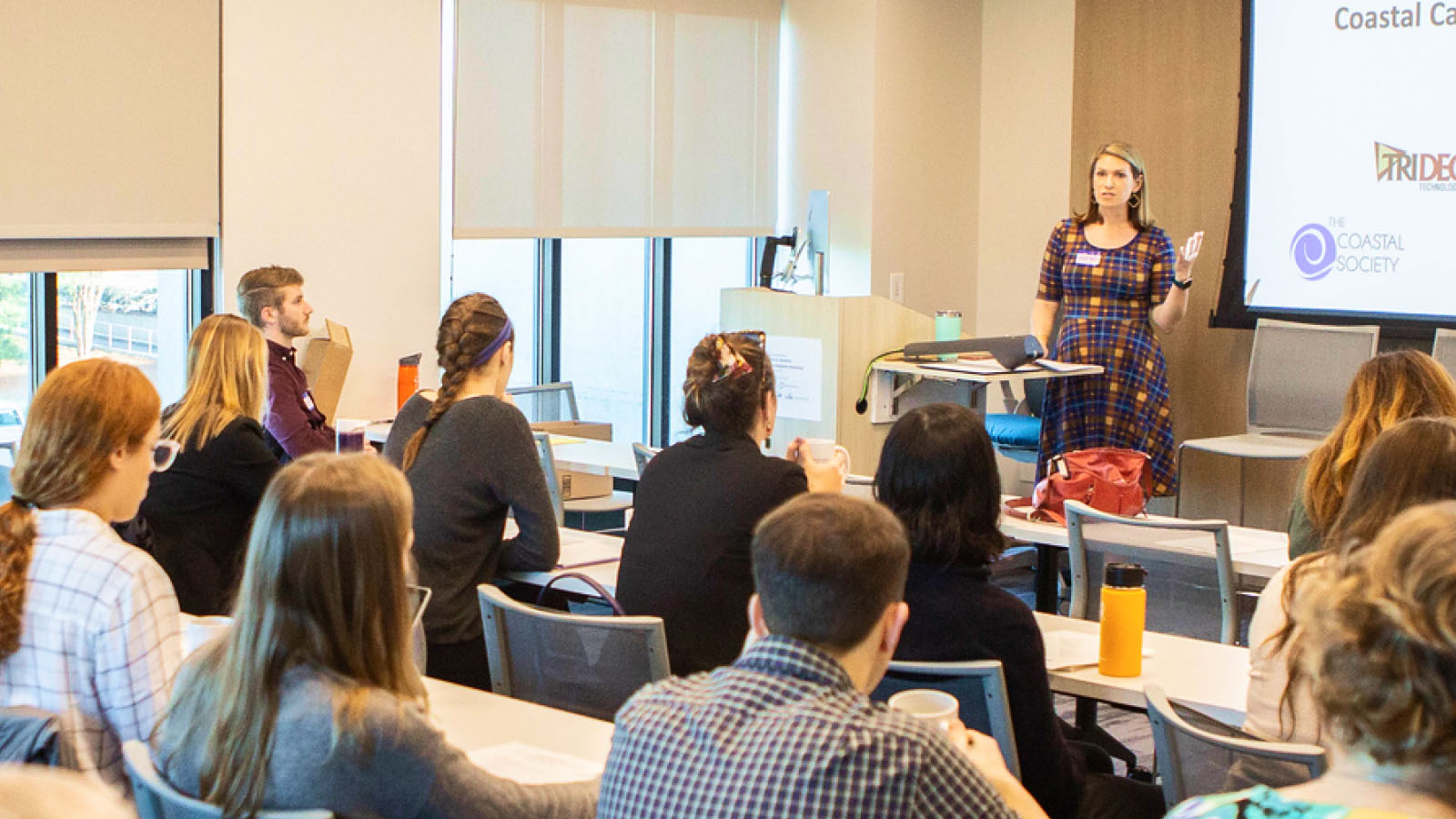
In developing a technical assistance program to support private landowners and contractors in implementing living shorelines, a big part of the effort was simply meeting people where they were. The Mississippi State University team spoke with more than 300 property owners through workshops, site visits, and one-on-one conversations. Many landowners had never heard of living shorelines, so the focus was on listening to their concerns and demonstrating how these projects could protect their property while also benefiting the coast.

“People like to follow trends, and will contact on behalf of their neighbors,” according to Jaden Akers, and this snowball effect led to whole neighborhoods being done. On the contractor side, trainings and shared resources helped bridge the gap between familiar bulkhead construction and newer nature-based approaches. This gave contractors the confidence and skills they needed to build living shorelines that would last, and when the contractors felt they did not have the expertise, Jaden was the connection they called to do an assessment.

Partnership Building
The work didn’t happen in a vacuum. The team relied on strong local and regional partnerships to disseminate information and enable projects. Groups like the City of Gulf Shores, Weeks Bay Research Reserve, Grand Bay Research Reserve, and Mississippi-Alabama Sea Grant helped share information and support outreach events. One of the biggest hurdles—finding enough native plants—was tackled through the Native Plant Producer Network. Schools, master gardeners, and even individual homeowners pitched in to grow plants for living shoreline projects. These partnerships not only solved a supply problem, but also fostered a sense of connection to the success of each project.

Policy and Permitting Support

Navigating permitting requirements can be one of the most challenging steps for a landowner. The MSU team helped homeowners understand the process in Mississippi and Alabama, where approvals have often been slower than expected. By walking people through requirements and staying engaged during long wait times, they helped reduce frustration and keep projects moving forward.
“It is flexible how you pitch a project to fit regulations, but the law is not flexible,” notes Sara Martin, underscoring the importance of the permit support process. The team also collaborated with state agencies, insurance providers, and realtors to raise awareness of living shorelines, making it easier for property owners to view them as a viable alternative to traditional bulkheads.


Next Steps
The team plans to expand outreach as interest grows across the Gulf Coast. Future priorities include securing sustainable funding, increasing native plant supply, and continuing to build contractor networks. Regional coordination will remain key to ensuring consistency and scalability.
Acknowledgment
Contributors
- City of Biloxi, Mississippi
- U.S. Environmental Protection Agency
- City of Gulf Shores, Alabama
- State of Mississippi
- Mississippi-Alabama Sea Grant
- Mississippi State University
- NOAA
- The Nature Conservancy
- Mississippi Department of Marine Resources
- U.S. Fish and Wildlife Service
- U.S. Department of Agriculture Natural Resources Conservation Service
- The University of Southern Mississippi